It is a fair question, especially in New Zealand where the weather can shift quickly. The short answer is yes, some scissor lifts can be used in wet conditions, but that does not mean every lift should be used in the rain or on a soaked site without proper planning. The safer answer is this: it depends on the type of scissor lift, the ground conditions, the weather on the day, and the work you need to carry out.
At Castle Access, we help clients make that call before the machine arrives. A lift that works perfectly in dry conditions can become the wrong choice once surfaces are slippery, ground softens, or visibility drops. Getting the setup right from the start helps avoid delays, unsafe operation, and costly re-hires.
Start with the type of Scissor Lift
Not all scissor lifts are built for the same environment. This is the first thing to get right.
If you are working indoors, or on a smooth slab in a controlled environment, an electric scissor lift is often the best fit. These lifts are quiet, clean, and efficient, but they are generally better suited to firm, even surfaces and more predictable conditions.
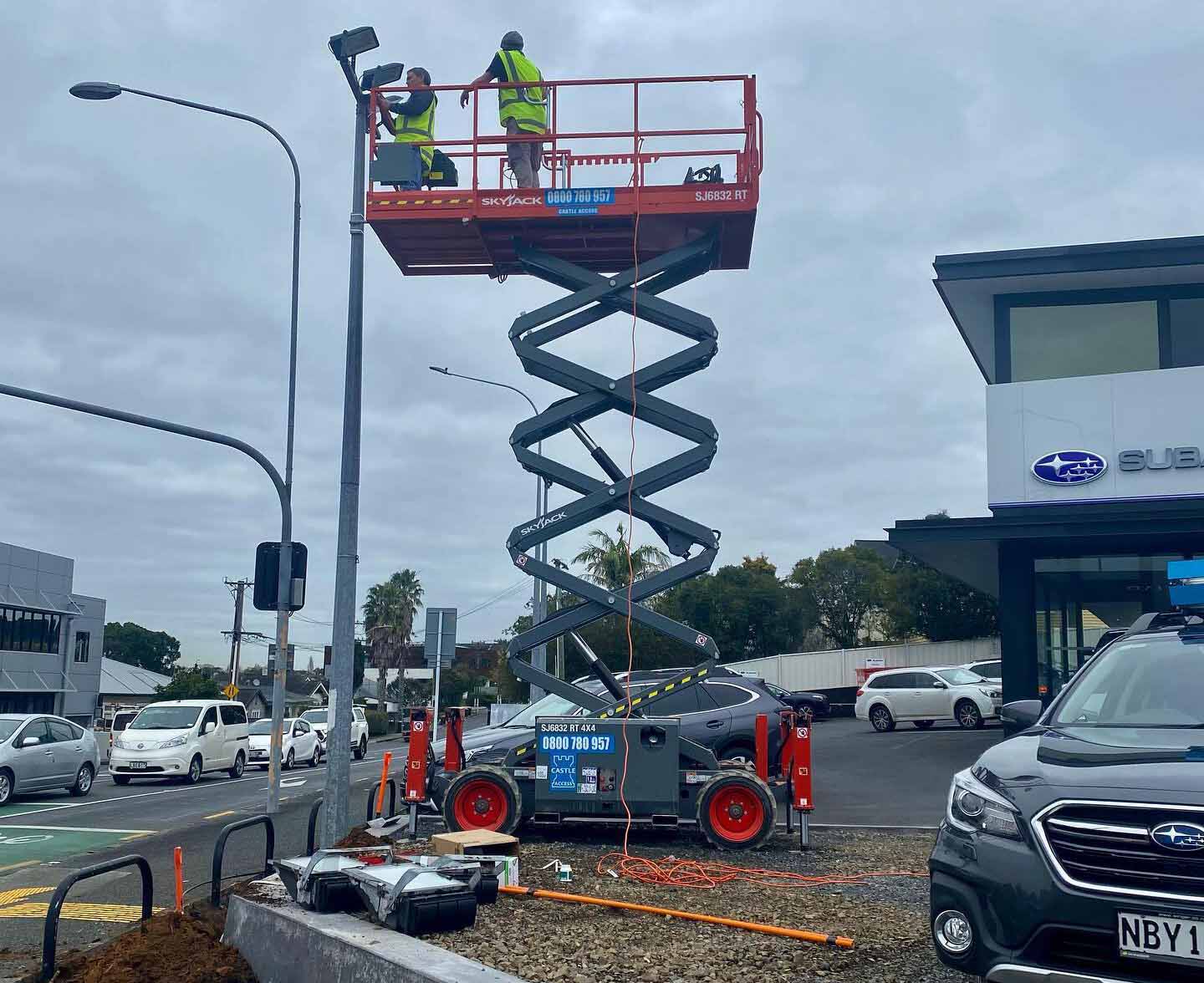
If you are working outdoors, especially on a construction site or uneven ground, a rough terrain scissor lift is usually the safer option. These machines are designed with tougher tyres, stronger traction, and better ground clearance, making them more suitable for rugged conditions.
For a broader overview of what is available, you can browse our full scissor lift hire range before booking.
Rain changes more than just the surface
When people think about rain, they usually focus on getting wet. The bigger issue is how quickly wet conditions affect safe operations.
Rain can reduce tyre grip, make platforms slippery, soften the ground under the machine, and create muddy access paths. On some sites, water can also collect around service trenches, unfinished surfaces, or recently filled areas. That means a scissor lift that looked stable in the morning may not be standing on the same quality of ground later in the day.
Wet conditions can also affect:
- braking performance
- operator visibility
- safe entry and exit from the platform
- the stability of outriggers or support points where applicable
- the handling of tools and materials at height
Can you use a scissor lift in the rain?
The practical answer is yes, but only when the machine is suitable for the conditions and the site has been assessed properly.
Outdoor-rated scissor lifts can often work in light rain or damp conditions, provided the surface remains stable and the operator follows the machine’s limits. That does not mean all wet-weather work is safe. Heavy rain, pooling water, high winds, soft ground, or steep surfaces can all turn a workable site into a no-go zone very quickly.
Indoor and slab-based units are a different story. If the machine is designed mainly for internal applications, it should not be assumed safe for wet outdoor use just because the task seems simple.
If there is any uncertainty, this is exactly the point where it pays to call us before hire. We help match the machine to the site, not just the height.
Ground conditions matter just as much as the weather
One of the most common mistakes in wet weather is focusing only on rainfall and forgetting about the ground.
A rough terrain unit may still be the wrong choice if the site is badly drained, deeply rutted, or unstable under load. In the same way, a concrete yard might still be usable after rain even when the weather looks poor, as long as the machine is appropriate and the work area remains safe.
Before operating any scissor lift in wet conditions, check:
- For a level surface
- If the ground has softened since delivery
- if there are hidden low spots or washouts
- whether the access route is still safe for movement
- if the machine has enough traction for the task
This is also where early planning helps. If you know your work is likely to continue through poor weather, it is worth reviewing the job with our team in advance so the right lift arrives first time.
Prestart checks become even more important
Wet weather is never the time to rush the basics.
Before using a scissor lift in damp or rainy conditions, operators should complete a proper prestart inspection and pay close attention to tyres, controls, guardrails, platform surfaces, and any signs of reduced traction or water exposure.
Operators should also check:
- that the entry area is not slippery
- that tools and materials are secured
- that footwear is suitable for wet surfaces
- that the platform floor is clear of mud or standing water
These checks matter on every job, but they matter even more when weather creates extra risk.
For more advice around changing weather, our blog on how weather conditions affect access equipment usage explains how poor weather can negatively affect the quality of your work while potentially hurting your team and equipment.
Common mistakes to avoid in wet-weather
A few issues come up again and again on rainy sites.
The first is hiring an indoor lift for outdoor work because the height looked right.
The second is assuming that if the machine can physically move, the ground must be safe enough.
The third is continuing to work after rain has changed the site conditions without reassessing the area.
Other common mistakes include:
- not allowing extra time for delivery and setup
- failing to check drainage and ground firmness
- carrying on in deteriorating weather
- choosing a smaller lift without thinking about traction or platform stability
Most of these problems are avoidable with a quick conversation with us before booking.
Talk to us before the weather becomes a problem
Rain is part of working outdoors in New Zealand. The key is not trying to guess your way through it. The key is choosing the right equipment, checking the site properly, and getting advice early.
If you are unsure whether your scissor lift can handle wet conditions, or whether a rough terrain machine would be the safer option, get in touch with Castle Access before you book. We will talk through your site, your schedule, and your work requirements so you can make the right call from the start.